
Skip to content

Cart

Your cart is empty

The Bright Future of Ethical Jewelry

Lab-Grown Diamonds

What Are Lab-Grown Diamonds?

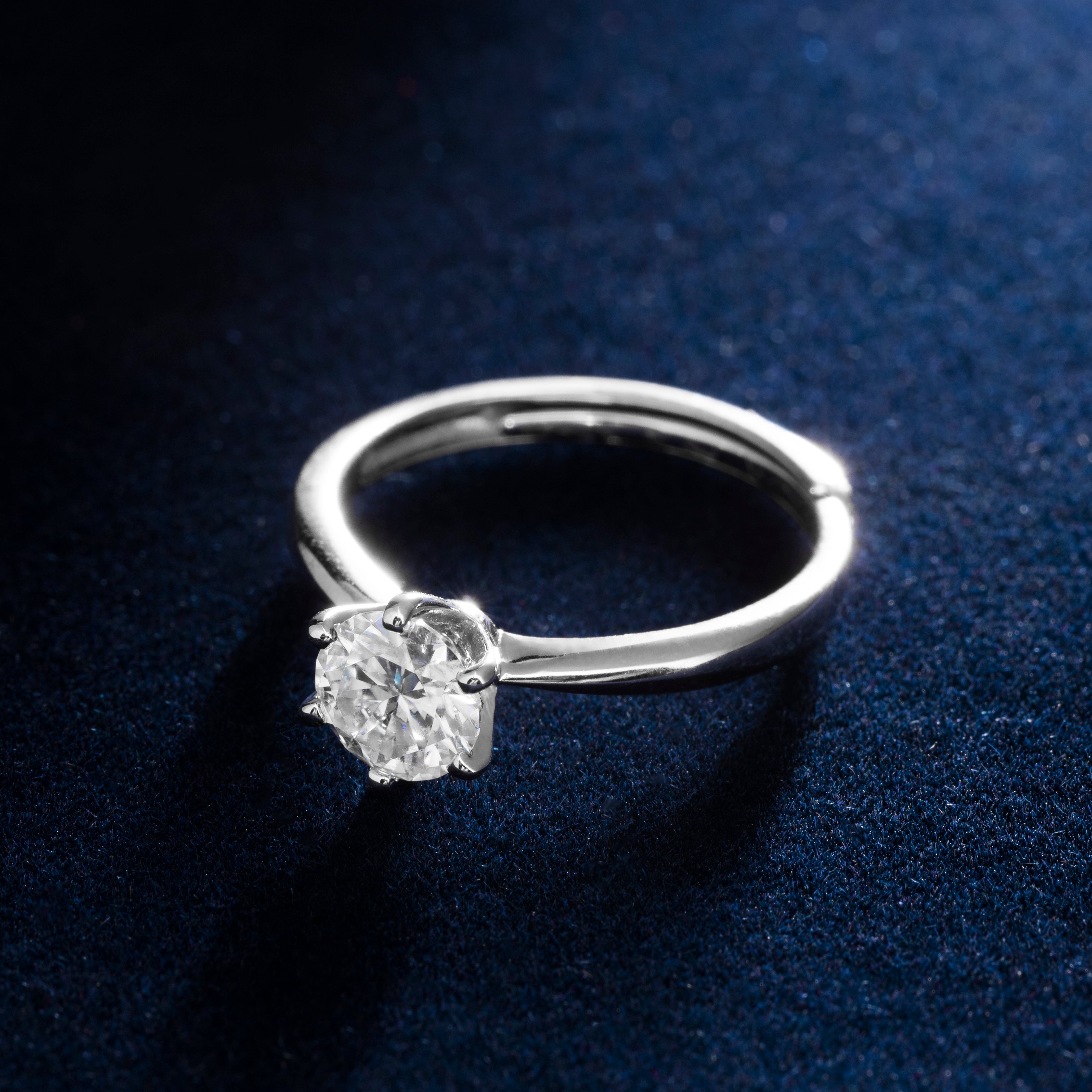
Lab-grown diamonds, also known as cultured or synthetic diamonds, are 100% real gemstones created in controlled laboratory conditions that replicate the natural processes found in the Earth's mantle.

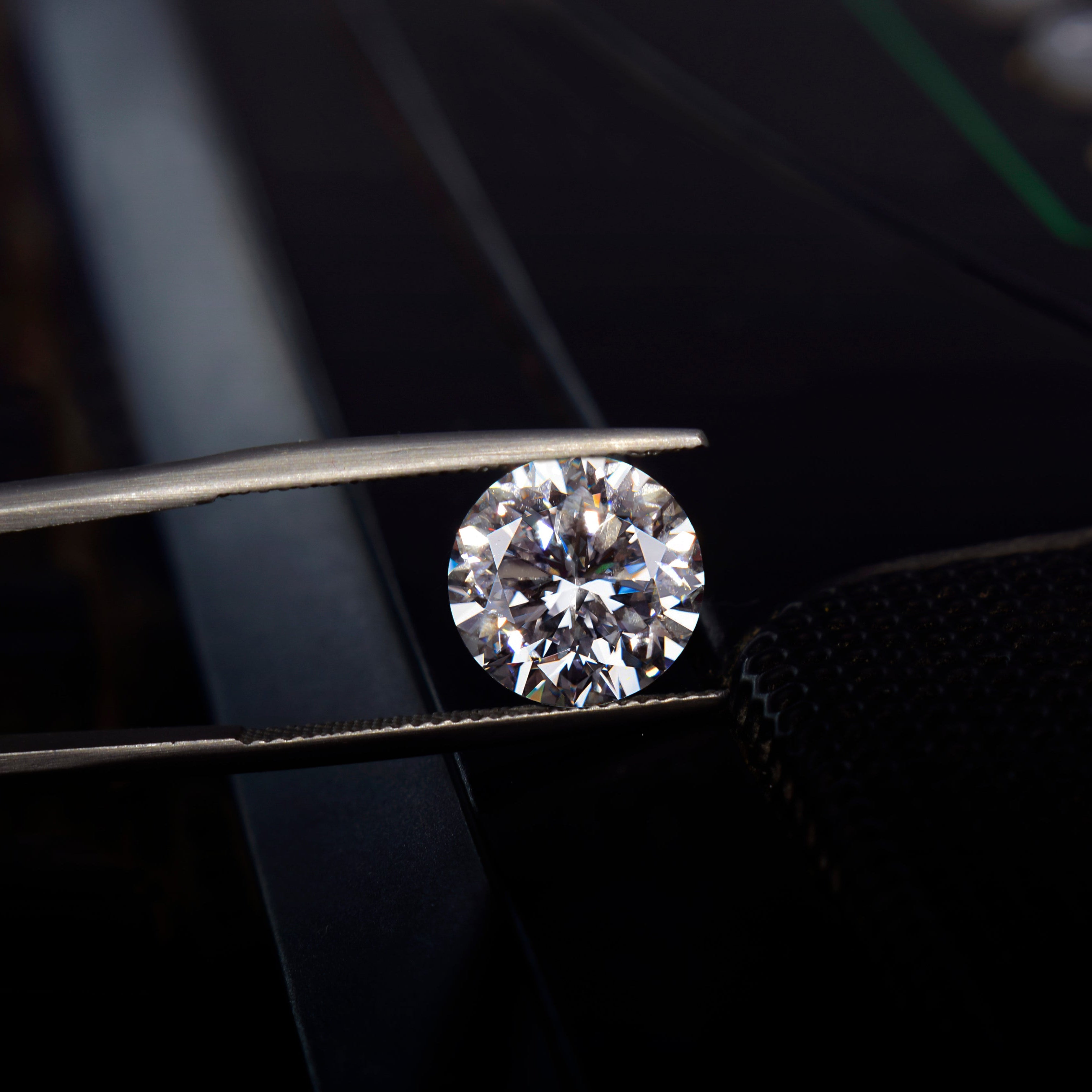
Composed of pure crystallized carbon, just like natural diamonds, they possess the same physical, chemical, and optical properties. They are equally hard (10 on the Mohs scale), equally brilliant, and completely indistinguishable to the naked eye.

The only difference: instead of billions of years in the Earth's depths, lab-grown diamonds are created in weeks using advanced technology.

100%

Pure Carbon

40-70%

Cheaper

6-10

Weeks to create

10

Mohs Hardness

The 4Cs of Diamonds

The quality and value of a diamond are determined by four fundamental characteristics, known as the "4Cs": Cut, Color, Clarity, and Carat.

Cut

The most important factor influencing a diamond's brilliance. A high-quality cut maximizes light reflection.

Cut grades:

  • Excellent - Maximum brilliance
  • Very Good - Excellent brilliance
  • Good - Good brilliance
  • Fair - Moderate brilliance
  • Poor - Reduced brilliance

Tip: Choose at least "Very Good" for optimal brilliance.

Color (Color)

Diamonds are graded from D (colorless, the rarest) to Z (visibly yellow/brown). Colorless diamonds are the most valuable.

Color Scale:

  • D-F - Colorless (exceptional)
  • G-J - Near colorless (excellent)
  • K-M - Faint tint (good)
  • N-R - Visible tint
  • S-Z - Pronounced tint

Tip: G-H offers the best value for money.

Clarity (Clarity)

Measures the presence of inclusions (internal flaws) and blemishes (external flaws). The fewer the imperfections, the more valuable the diamond.

Clarity Scale:

  • FL/IF - Flawless (ultra-rare)
  • VVS1-VVS2 - Very, Very Slightly Included
  • VS1-VS2 - Very Slightly Included
  • SI1-SI2 - Slightly Included
  • I1-I3 - Included

Tip: VS2-SI1 offers excellent clarity at an affordable price.

Carat (Weight)

The unit of measurement for diamond weight (1 carat = 0.2 grams). Weight influences visible size and price.

Popular weights:

  • 0.50 ct - Delicate and elegant
  • 0.75 ct - Balanced
  • 1.00 ct - Classic (most popular)
  • 1.50 ct - Impressive
  • 2.00+ ct - Statement luxury

Tip: 0.90-0.95 ct offers a 1 ct look at a lower price.

How Lab-Grown Diamonds Are Made

Two advanced methods replicate the extreme conditions of the Earth's mantle to create authentic diamonds.

CVD method

Chemical Vapor Deposition

The process:

A small diamond crystal (the seed) is placed in a vacuum chamber. Carbon-rich gases (typically methane) are heated to 800-900°C, and carbon atoms deposit layer by layer on the seed, forming the diamond.

CVD Characteristics:

  • Lower temperatures (800-900°C)
  • Low pressure
  • More controlled and uniform growth
  • Ideal for large, high-clarity diamonds
  • Time: 2-4 weeks for 1 carat
  • Exceptional purity (Type IIa)

Advantages:

  • Superior clarity
  • Fewer inclusions
  • Precise color control
  • Possibility of creating large diamonds
HPHT method

High Pressure High Temperature

Pure carbon is subjected to extreme pressures (5-6 GPa, equivalent to 50,000 atmospheres) and temperatures exceeding 1,400°C in the presence of a metallic catalyst. The conditions exactly mimic the natural process within the Earth's mantle.

HPHT Characteristics:

  • Very high temperatures (1,400-1,600°C)
  • Extreme pressure (5-6 GPa)
  • Older and more tested method
  • Naturally reproduces the geological process
  • Time: 1-2 weeks per 1 carat
  • Cubic/octahedral diamonds

Advantages:

  • Faster process
  • "Natural-looking" diamonds
  • Excellent for fancy colors
  • Well-established technology
Feature Natural Diamonds Lab-Grown Diamonds
Chemical composition Pure carbon Pure carbon (identical)
Hardness (Mohs) 10 10
Luster Identical Identical
Training time 1-3 billion years 6-10 weeks
Price (per carat) Market standard 40-70% cheaper
Resale value Stable, recognized In development
Ecological impact Intensive mining Significantly reduced
Certification GIA, IGI, AGS GIA, IGI, GCAL

Advantages of Lab-Grown Diamonds

Why more and more people are choosing lab-grown diamonds.

Affordable Price

40-70% cheaper than natural diamonds of the same quality.

  • A larger diamond for the same budget
  • Access to premium clarity and color
  • Excellent value for money

Sustainability

Significantly lower ecological impact compared to traditional mining.

  • No deforestation or massive excavations
  • 80% reduction in water consumption
  • Reduced carbon emissions
  • No ecosystem destruction

Transparent & Ethical Process

100% traceability and the certainty of an ethical source.

  • Do not originate from conflict zones
  • Do not finance armed conflicts
  • Known and verifiable origin
  • Controlled working conditions

Superior Quality

A controlled environment allows for the creation of flawless diamonds.

  • Fewer inclusions
  • Superior clarity available
  • More accessible perfect colors
  • Type IIa (the purest form)

Identical to Natural

The same composition, hardness, and brilliance.

  • 100% pure crystallized carbon
  • Hardness of 10 on the Mohs scale
  • The same optical properties
  • Impossible to differentiate visually

Full Certification

Certificates from the same prestigious laboratories.

  • GIA (Gemological Institute of America)
  • IGI (International Gemological Institute)
  • GCAL (Gem Certification & Assurance Lab)
  • Complete reports with all details

Affordable Fancy Colors

Natural colored diamonds are extremely rare and expensive.

  • Blue, pink, yellow available
  • 90% lower price than natural
  • Intense and vibrant colors
  • Perfect for statement pieces

Continuous Innovation

Technology is constantly evolving, improving quality.

  • Larger diamonds possible
  • Shorter production time
  • Increased energy efficiency
  • Continuously decreasing costs

Ideal for an Engagement Ring

Increasingly popular for modern engagement rings.

  • Symbolizes future and innovation
  • Conscious and responsible choice
  • A bigger diamond for a smaller budget

Certification and Identification

How laboratory-grown diamonds are certified and identified.

GIA (Gemological Institute of America)

The gold standard in certification. The most respected and stringent laboratory in the world. The 4Cs system was created by GIA.

  • The most rigorous in grading
  • Internationally recognized
  • Includes number and laser inscription
  • Detailed report with diagram

IGI (International Gemological Institute)

The world's largest certification laboratory. Very popular for lab-grown diamonds. Consistent standards.

  • Fast and affordable
  • Specialist in lab-grown
  • Global presence
  • Digital reports

How to Identify

Lab-grown diamonds can only be identified by experts with specialized equipment.

  • UV-Vis Spectroscopy
  • Photoluminescence
  • Inclusion microscope
  • Laser inscription on girdle
  • Impossible with the naked eye

Mandatory Markings

All lab-grown diamonds must be clearly marked and declared.

  • "Laboratory-Grown" on the certificate
  • Microscopic laser inscription
  • Mandatory declaration at point of sale

Myths and Realities

Debunking Misconceptions About Lab-Grown Diamonds.

❌ MYTH: "They are false"

REALITY: Lab diamonds are 100% real. They are pure carbon crystallized with the same structure as natural ones. "Fake" would be a cubic zirconia or moissanite.

❌ MYTH: "They are not durable"

REALITY: They have the exact same hardness (10 Mohs). They are just as hard, strong, and durable as natural diamonds. They will last just as long – forever!

❌ MIT: "Differences can be observed"

REALITY: They are impossible to differentiate with the naked eye or even with a magnifying glass. Only specialized laboratory equipment can identify their origin.

❌ MIT: "They have no value"

REALITY: They have real value, only the price is more affordable. They retain their value compared to the purchase price, just like natural ones.

❌ MYTH: "I am plastic"

REALITY: I am pure carbon, not plastic! I have the same chemical composition as natural diamonds - C (carbon) in a cubic crystal lattice.

❌ MIT: "They're losing their shine"

REALITY: They shine identically and permanently. The optical properties are the same. They never "expire" or lose their brilliance.

Do you need help?

Frequently Asked Questions

Do you have questions about jewelry and want to find out more details?

Speak with a specialist, wherever you are!